Remington · Semi-automatic shotgun
Remington Model 1100 Value
The Model 1100 is a gas-operated semi-automatic shotgun that was offered in multiple gauges and a wide range of barrel and stock configurations for hunting and competitive clay shooting. Its softer recoil impulse compared to earlier recoil-operated autoloaders made it popular with a broad range of shooters.
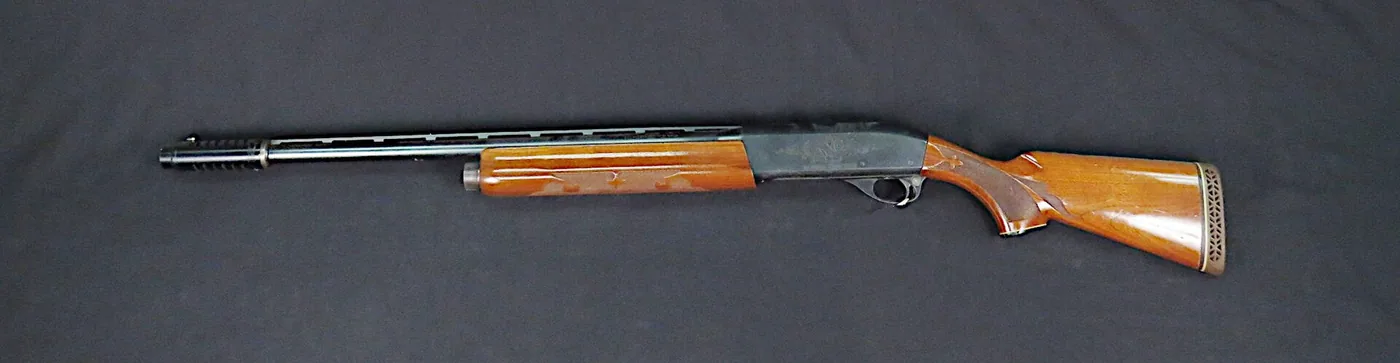
- Type
- Semi-automatic shotgun
- Production
- Introduced in the mid-1960s and produced for decades in multiple gauges
- Maker
- Remington
About the Remington Model 1100
The Model 1100 is a gas-operated semi-automatic shotgun that was offered in multiple gauges and a wide range of barrel and stock configurations for hunting and competitive clay shooting. Its softer recoil impulse compared to earlier recoil-operated autoloaders made it popular with a broad range of shooters.
The 1100 was produced in high volume across many years, so most examples are common field or clays guns rather than rare pieces, and assessment tends to focus on gauge, barrel configuration, and condition of the gas system and finish.
Trap, skeet, and Tournament Skeet (TS) target-grade variants with upgraded wood and rib configurations are viewed differently than standard field-grade guns.
Variations
Remington Model 1100 variations that matter
Configuration is often the difference between two otherwise identical examples.
Field grade
Standard hunting configuration with a blued receiver and walnut stock in various gauges.
Trap and Skeet models
Target-grade variants with dedicated ribs, stock dimensions, and often higher-grade wood for competitive shooting.
Left-hand and youth/LT-20 configurations
Alternate stock and receiver configurations built for left-handed shooters or smaller-framed shooters.
Small-gauge (28-gauge, .410) variants
Less common gauge offerings that shifted the platform's proportions and appeal for upland and skeet use.
Valuation
What affects Remington Model 1100 value
We do not publish a price chart. These are the characteristics that determine what a specific example evaluates at.
Factor 1
Gauge
12-gauge field guns are the most common; smaller gauges such as 28-gauge or .410 are less frequently encountered.
Factor 2
Target vs. field configuration
Trap and Skeet models with upgraded wood and ribs are assessed differently than standard field guns.
Factor 3
Gas system condition
Because the action relies on a gas system, cleanliness and function of the piston and o-rings are a practical condition factor.
Factor 4
Barrel and choke configuration
Fixed-choke versus interchangeable choke-tube barrels affect how a given gun is evaluated.
Factor 5
Stock condition and finish
Cracks near the receiver, refinishing, or replaced wood affect assessment relative to an original, sound stock.
Factor 6
Included accessories
Extra barrels, factory case, and choke tubes can factor into an overall evaluation.
Remington Model 1100: common questions
Related to the Remington Model 1100
Manufacturers
Firearms we buy
Selling a Remington Model 1100?
Send the details and photographs and we will evaluate the example you actually own.