Winchester and its logo are trademarks of their owner, shown for identification only. We are an independent federally licensed buyer, not an authorised dealer.
Manufacturer value guide
Winchester Firearm Values
Winchester Repeating Arms is closely associated with the American lever-action rifle, particularly the Model 1873 and Model 94, and with the pre-1964 manufacturing era prized by collectors.
Find your model below for a general estimated selling range, then submit a few details for your actual offer. These ranges reflect what common Winchester models may typically sell for based on model, configuration, condition and current market demand.
Two firearms with the same model name can have very different values. Condition, exact variant, caliber, finish, included accessories, modifications and current market demand can all affect what we can pay.
The ranges above are intended to give you a useful starting point. Your actual offer is based on the firearm you submit.
Fair
Usually toward the lower portion of the range.
Good
Generally within the middle of the range.
Excellent
May qualify toward the higher end of the range.
Condition alone does not determine placement within a range. Variant, configuration, demand, modifications and included accessories can also materially affect value.
Estimated ranges are provided for general informational purposes and are not guaranteed purchase offers or appraisals. Actual offers depend on the exact firearm, variant, condition, configuration, accessories, current market conditions and other relevant factors. Pricing may change over time.
About Winchester
Winchester Repeating Arms Company traces its roots to 1866 and the reorganization of the New Haven Arms Company by Oliver Winchester, building on the earlier Henry rifle design. The company became closely identified with the lever-action rifle through models like the 1873, 1892, 1894, and 1895, earning the nickname 'The Gun that Won the West' for its Model 1873. Winchester also produced significant bolt-action rifles, including the Model 70, and pump and semi-automatic shotguns such as the Model 12 and Model 1897.
Among collectors, the year 1964 is a pivotal reference point: Winchester changed manufacturing processes that year to reduce costs, and pre-1964 production of models like the Model 70 and Model 94 is generally regarded as a distinct manufacturing era from what followed. The New Haven, Connecticut factory closed in 2006, and the Winchester name has since been produced under license by other manufacturers, which collectors also use to help place a firearm's era of manufacture.
Because Winchester's lever-action and bolt-action rifles were produced continuously for over a century with many running changes, serial number ranges, caliber markings, and small design details such as barrel bands, sight types, and receiver markings are used to identify a rifle's specific production period.
Models
Winchester models we evaluate
Each model page explains the variations, markings and condition factors that move the number on that specific firearm.
The Model 1873, 1892, 1894, and 1895 lever-action rifles, produced in a range of calibers from the 19th century through modern reissues.
Bolt-action rifles
The Model 70 and related bolt-action sporting rifles, with pre-1964 examples treated as a distinct collecting category.
Shotguns
Pump-action and semi-automatic shotguns including the Model 12 and Model 1897, widely used for both sporting and military purposes.
Single-shot and early rifles
Earlier single-shot and falling-block rifle designs from Winchester's 19th-century catalog.
Valuation
What affects Winchester firearm values
These are the characteristics we assess on the specific firearm in front of us — not a model-number price chart.
Factor 1
Production era and age
Pre-1964 manufacturing is a major dividing line for Model 70 and Model 94 rifles, with post-1964 production generally viewed as a separate manufacturing category by collectors.
Factor 2
Condition
Wood-to-metal fit, bore condition, and finish wear on the receiver and barrel are closely examined given the age of many Winchester lever guns.
Factor 3
Originality
Original bluing, case coloring, and factory wood stocks are weighed heavily against refinished metal or replaced stocks, which are common on well-used working rifles.
Factor 4
Factory configuration and chambering
Barrel length, magazine tube length, sight configuration, and caliber all define specific factory variants within a model run.
Factor 5
Special editions and commemoratives
Winchester produced numerous commemorative rifles honoring historical events and anniversaries, which are treated as a distinct collecting category from standard working rifles.
Factor 6
Documentation
Factory letters, when available for a given serial number, along with original boxes and hang tags, support a rifle's history and original configuration.
Factor 7
Collector demand
Pre-1964 Model 70 and early Model 1873 and 1894 rifles see especially strong and sustained collector interest tied to their manufacturing era.
Notable Winchester model families
Model 1873
One of Winchester's most historically significant lever-action rifles, chambered in early metallic cartridges and closely tied to the American frontier era.
Model 94
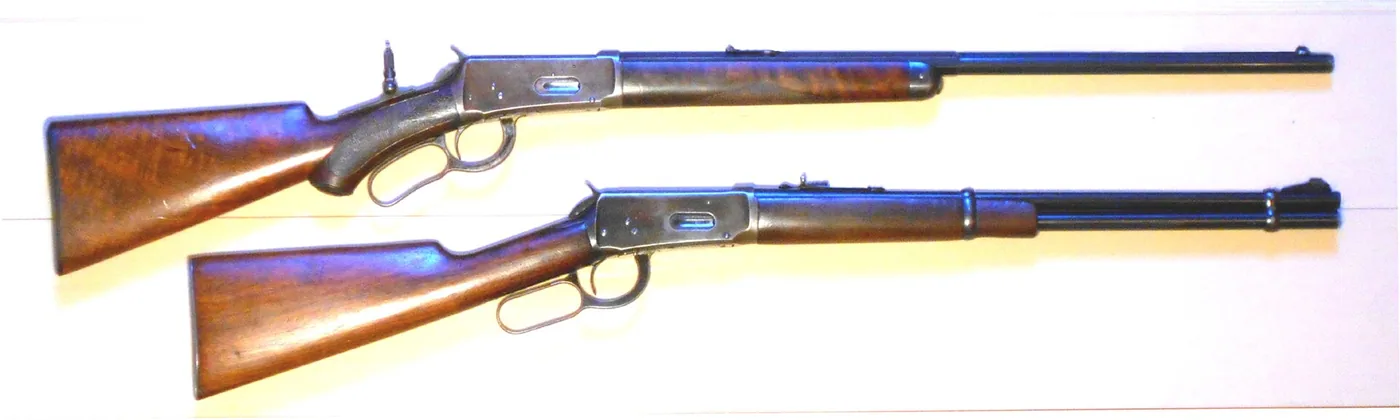
A long-running lever-action rifle chambered largely in .30-30 Winchester, produced for over a century with pre-1964 examples especially noted by collectors.
Model 70
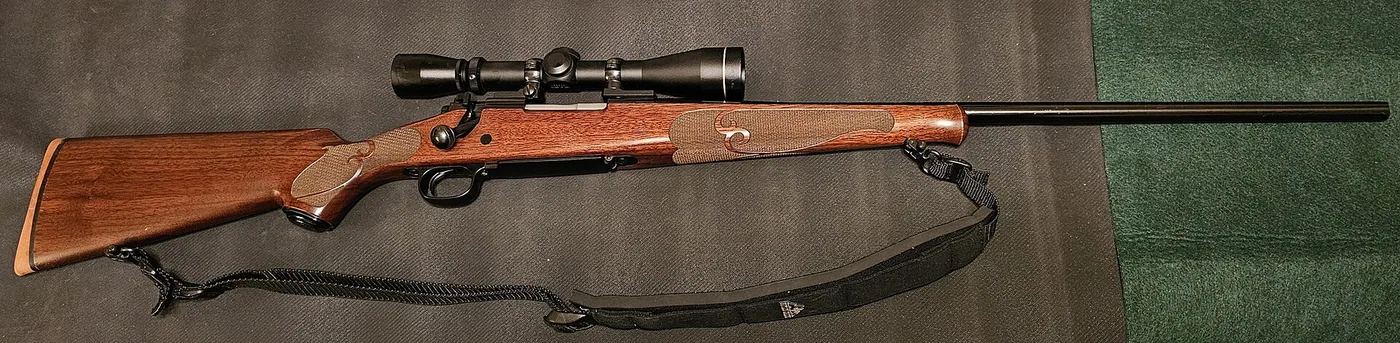
Winchester's flagship bolt-action rifle, with pre-1964 'pre-64' examples regarded as a distinct and closely studied manufacturing era.
Model 1892
A lever-action rifle scaled for pistol-caliber cartridges, produced in large numbers in the late 19th and early 20th centuries.
Model 12
A pump-action shotgun produced for decades, noted for its solid-frame steel receiver and use in both hunting and military contexts.
Model 1895
A box-magazine lever-action rifle chambered for larger cartridges, notable for military contract use in addition to sporting sales.