Winchester · Bolt-action rifle
Winchester Model 70 Value
The Winchester Model 70 is a bolt-action rifle long regarded as a benchmark sporting rifle, offered in a wide range of chamberings for hunting and target use. Its controlled-round-feed action and quality of fit and finish in early production earned it a strong reputation among American hunters.
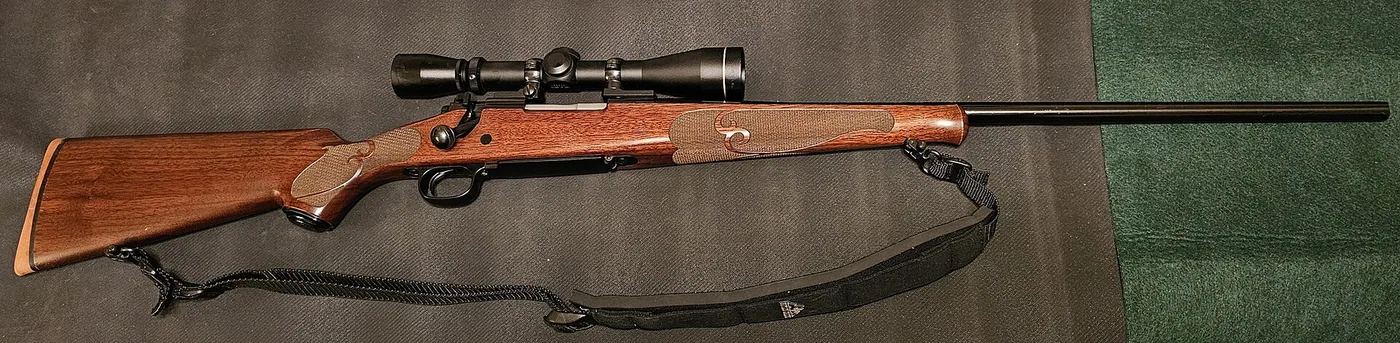

- Type
- Bolt-action rifle
- Production
- Introduced in the mid-1930s and continuing in updated form to the present
- Maker
- Winchester
About the Winchester Model 70
The Winchester Model 70 is a bolt-action rifle long regarded as a benchmark sporting rifle, offered in a wide range of chamberings for hunting and target use. Its controlled-round-feed action and quality of fit and finish in early production earned it a strong reputation among American hunters.
In 1964, Winchester made significant changes to manufacturing methods and design to reduce production costs, resulting in a lasting distinction between pre-1964 and post-1964 production that collectors reference closely. Winchester later reintroduced features closer to the original design in subsequent decades.
The Model 70 has been offered in numerous configurations over its long run, from standard sporters to featherweight and target-oriented variants, each with its own set of collector considerations.
Variations
Winchester Model 70 variations that matter
Configuration is often the difference between two otherwise identical examples.
Pre-1964 Model 70
Early production used a controlled-round-feed action, forged parts, and hand-finishing methods generally regarded as higher quality by collectors.
Post-1964 Model 70
Production changes introduced push-feed actions, more machine-stamped parts, and cost-reduced manufacturing methods, representing a distinct configuration from pre-1964 rifles.
Featherweight variants
Lighter-weight sporter configurations with slimmer stocks were offered as a distinct model line within the Model 70 family.
Later Controlled Round Feed reintroductions
Winchester later reintroduced controlled-round-feed actions in some Model 70 configurations, distinct from both original pre-1964 and interim post-1964 production.
Valuation
What affects Winchester Model 70 value
We do not publish a price chart. These are the characteristics that determine what a specific example evaluates at.
Factor 1
Pre-64 vs post-64 status
Whether a Model 70 was produced before or after the 1964 manufacturing changes is one of the most closely examined factors for this model.
Factor 2
Caliber and configuration
Certain calibers and configurations, such as featherweight or target variants, were produced in different numbers and are considered individually.
Factor 3
Stock and metal condition
Original finish condition on both wood and metal is a standard consideration for any used bolt-action rifle.
Factor 4
Action originality
Whether the action, barrel, and stock are original to each other as factory-assembled matters to collectors of this model.
Factor 5
Sights and optics mounting
Original iron sights or factory-drilled scope mounting can be part of assessing a specific rifle's configuration.
Factor 6
Documentation
Factory letters or original paperwork, when available, can be relevant to some collectors researching a specific example.
Winchester Model 70: common questions
Related to the Winchester Model 70
Manufacturers
Firearms we buy
Specialty value topics
Selling a Winchester Model 70?
Send the details and photographs and we will evaluate the example you actually own.