Ruger · Single-action revolver
Ruger Blackhawk Value
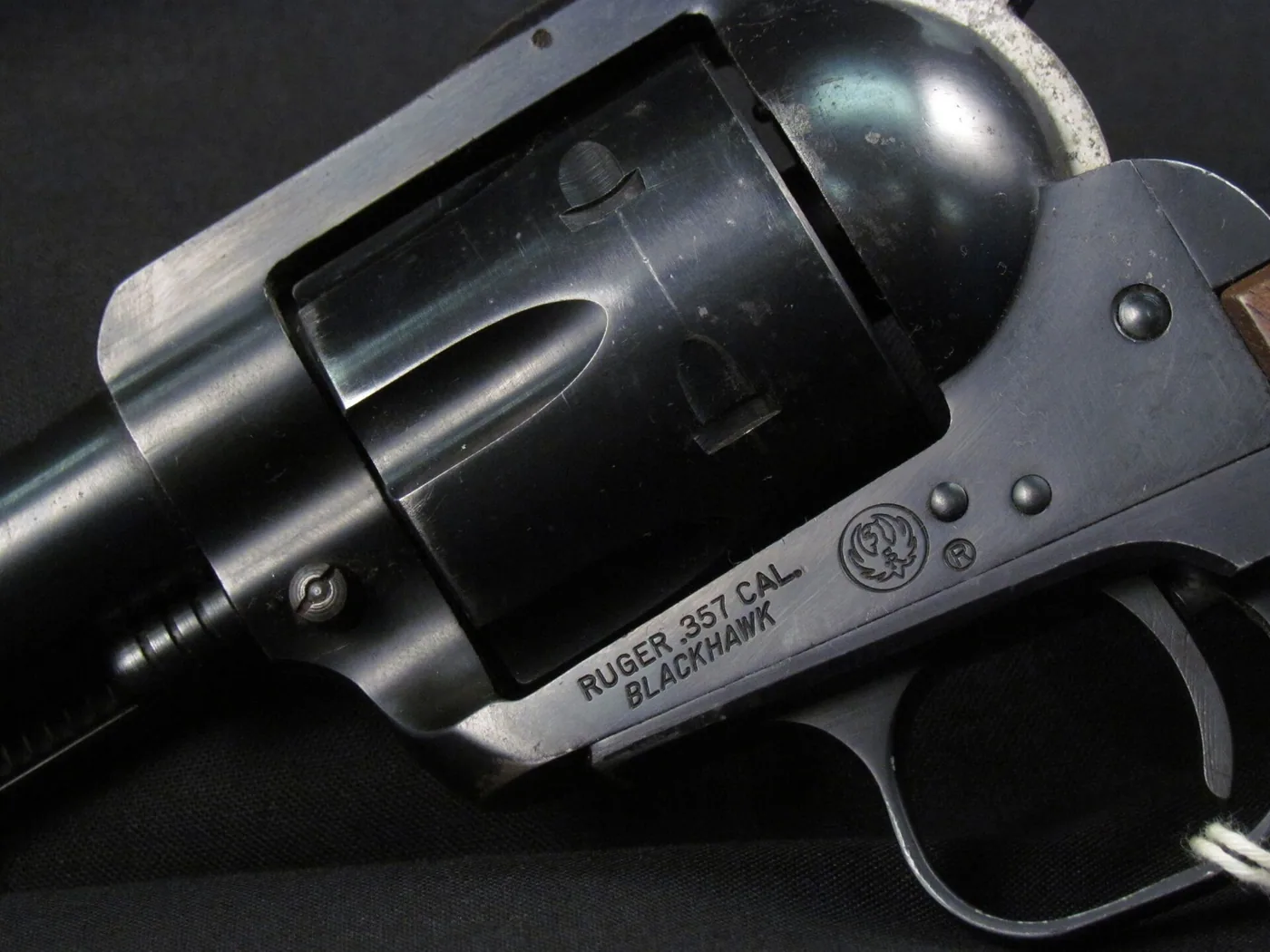
The Ruger Blackhawk was introduced as a modernized single-action revolver, combining coil-spring internals with a profile reminiscent of classic single-action sixguns. It became a mainstay for hunters, sport shooters, and collectors who wanted a rugged, adjustable-sight single-action at an accessible production scale.
- Type
- Single-action revolver
- Production
- Introduced in the early 1950s and continuing in updated form to the present
- Maker
- Ruger
About the Ruger Blackhawk
The Ruger Blackhawk was introduced as a modernized single-action revolver, combining coil-spring internals with a profile reminiscent of classic single-action sixguns. It became a mainstay for hunters, sport shooters, and collectors who wanted a rugged, adjustable-sight single-action at an accessible production scale.
Ruger later revised the action twice: first with a transfer-bar safety system in the mid-1970s, and it has continued offering the Blackhawk in various calibers and barrel lengths since. Each generation is distinct enough that collectors and buyers pay close attention to which action type a given gun has.
Because the Blackhawk was produced continuously with running design changes, dating and identifying the exact variant is central to understanding what a particular example represents.
Variations
Ruger Blackhawk variations that matter
Configuration is often the difference between two otherwise identical examples.
Three-screw (old model) Blackhawk
Early Blackhawks made before the mid-1970s used a flat-latch or older loading gate design without a transfer bar, identifiable by three visible frame screws. These are handled differently for safe carry and are viewed distinctly by collectors from later guns.
New Model (transfer-bar) Blackhawk
From the mid-1970s onward, Ruger added a transfer-bar safety allowing safe carry with all chambers loaded, recognizable by a lack of the third screw and a different loading gate feel.
.357 vs .41 vs .44 Magnum and other chamberings
The Blackhawk has been offered in numerous calibers over its run, with some chamberings produced in far smaller numbers or for shorter windows than the mainstream .357 and .44 Magnum runs.
Barrel length and finish variants
Barrel lengths have ranged from short packing lengths to longer target-oriented barrels, with blued and stainless finishes offered depending on era.
Valuation
What affects Ruger Blackhawk value
We do not publish a price chart. These are the characteristics that determine what a specific example evaluates at.
Factor 1
Action type
Whether a Blackhawk is an old three-screw model or a New Model transfer-bar gun materially changes how it is evaluated, since the two use different internal safety systems.
Factor 2
Caliber rarity
Some Blackhawk chamberings were produced in limited runs or for short periods, which affects how the model is viewed relative to the common .357 and .44 Magnum versions.
Factor 3
Condition of finish and grips
Original blue or stainless finish condition, along with whether factory grips are present and undamaged, plays a large role in assessing a given example.
Factor 4
Mechanical originality
Whether the revolver retains its original internal parts versus having been converted between old and new model configurations affects how collectors view it.
Factor 5
Box and papers
Original Ruger packaging, manuals, and any included tools can matter to buyers assembling complete factory sets.
Factor 6
Barrel length configuration
Less common barrel lengths for a given caliber can be viewed differently than the most commonly encountered configurations.
Ruger Blackhawk: common questions
Related to the Ruger Blackhawk
Manufacturers
Firearms we buy
Selling a Ruger Blackhawk?
Send the details and photographs and we will evaluate the example you actually own.