Smith & Wesson and its logo are trademarks of their owner, shown for identification only. We are an independent federally licensed buyer, not an authorised dealer.
Manufacturer value guide
Smith & Wesson Firearm Values
Smith & Wesson is a Springfield, Massachusetts-based manufacturer best known for double-action revolvers and, more recently, its semi-automatic pistol lines.
Find your model below for a general estimated selling range, then submit a few details for your actual offer. These ranges reflect what common Smith & Wesson models may typically sell for based on model, configuration, condition and current market demand.
Two firearms with the same model name can have very different values. Condition, exact variant, caliber, finish, included accessories, modifications and current market demand can all affect what we can pay.
The ranges above are intended to give you a useful starting point. Your actual offer is based on the firearm you submit.
Fair
Usually toward the lower portion of the range.
Good
Generally within the middle of the range.
Excellent
May qualify toward the higher end of the range.
Condition alone does not determine placement within a range. Variant, configuration, demand, modifications and included accessories can also materially affect value.
Estimated ranges are provided for general informational purposes and are not guaranteed purchase offers or appraisals. Actual offers depend on the exact firearm, variant, condition, configuration, accessories, current market conditions and other relevant factors. Pricing may change over time.
About Smith & Wesson
Smith & Wesson was founded in 1852 by Horace Smith and Daniel Wesson and has operated continuously from Springfield, Massachusetts for most of its history. The company built its early reputation on cartridge revolvers, including tip-up and top-break models, before transitioning to the swing-out cylinder double-action revolvers that defined much of the 20th century. Its K-frame, N-frame, and J-frame revolver platforms became standard-issue sidearms for police departments across the United States for decades.
Collectors often distinguish Smith & Wesson production by frame size and era, with the Model 10, Model 19, Model 27, and Model 29 among the most recognized revolver model numbers. The company's shift from a numbered model system in the mid-1950s to earlier named designations (such as the .38 Military & Police or .357 Magnum) is a key reference point for dating and identifying pre-war and transitional revolvers. Smith & Wesson also entered the semi-automatic pistol market with double-action designs in the mid-20th century and later expanded into polymer-framed pistols.
The company's ownership changes, including a period under British ownership in the 1980s and 1990s, are sometimes used by collectors as rough dating markers alongside serial number ranges. Because Smith & Wesson revolvers were produced in extremely high volumes for both civilian and law-enforcement markets, condition and originality carry significant weight in distinguishing individual examples.
Models
Smith & Wesson models we evaluate
Each model page explains the variations, markings and condition factors that move the number on that specific firearm.
Late 19th-century cartridge revolvers with a hinged frame that automatically ejects spent cases.
Swing-out cylinder revolvers
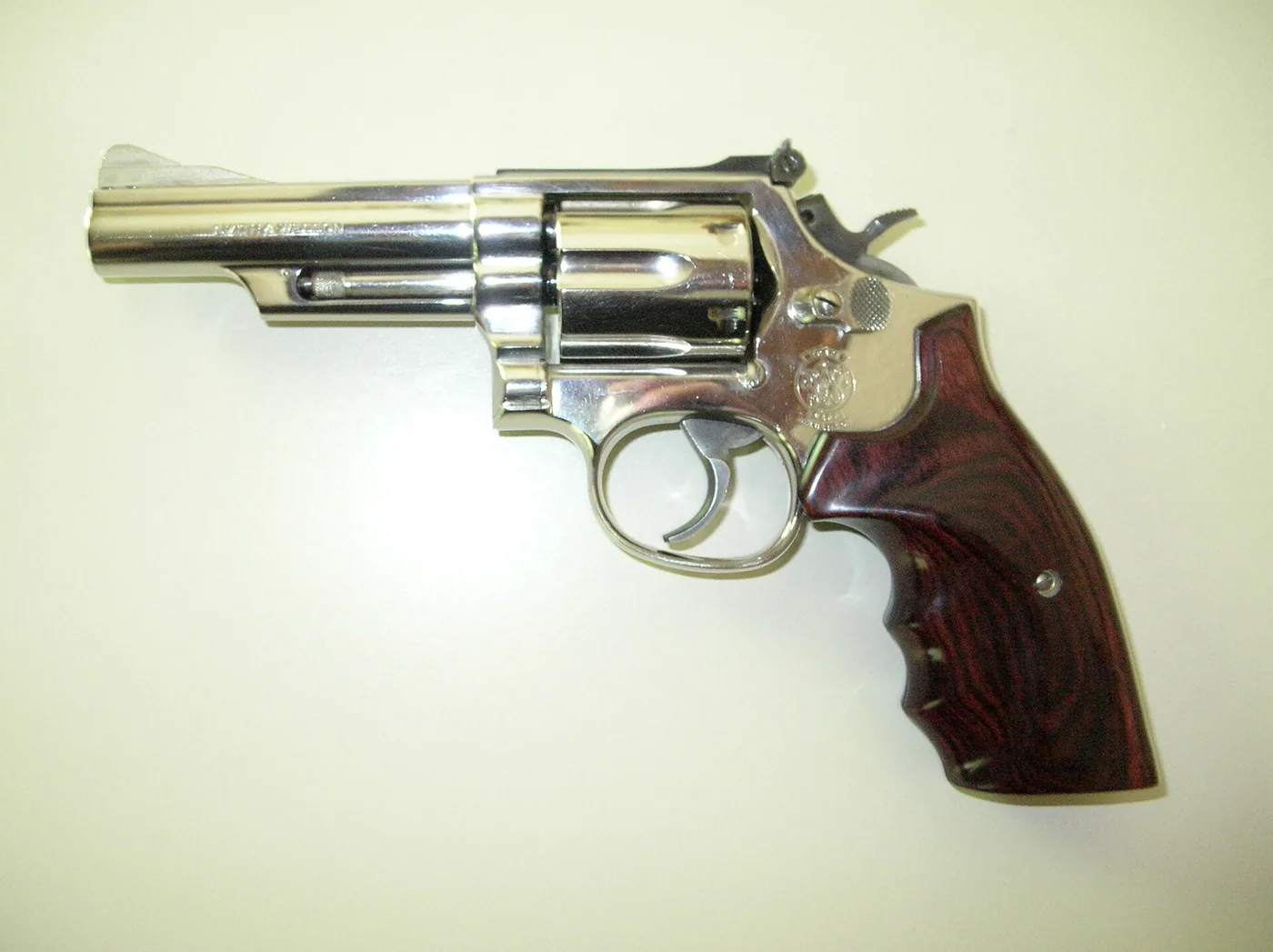
K-frame, L-frame, N-frame, and J-frame double-action revolvers produced from the early 20th century to the present.
Semi-automatic pistols
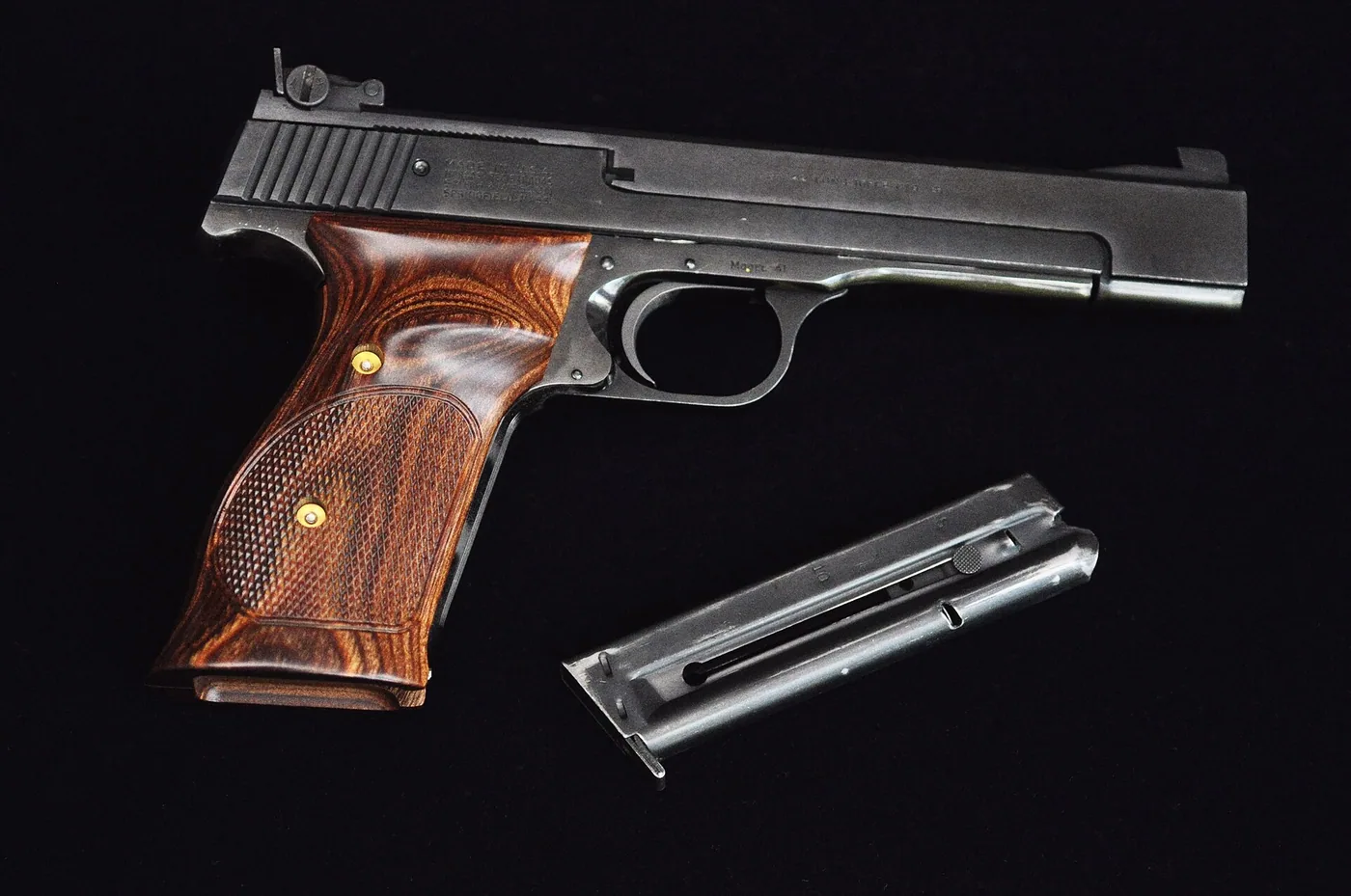
Double-action and later striker-fired semi-automatic pistols, including the Model 39/59 series and the polymer-framed M&P line.
Long guns
A smaller but notable line of rifles and shotguns produced under the Smith & Wesson name in certain periods.
Valuation
What affects Smith & Wesson firearm values
These are the characteristics we assess on the specific firearm in front of us — not a model-number price chart.
Factor 1
Production era and age
Pre-Model 10/pre-war revolvers with earlier naming conventions are generally treated as a distinct collecting category from post-1957 numbered models.
Factor 2
Condition
Cylinder timing, barrel-cylinder gap, bore condition, and finish wear are all inspected closely, since these revolvers were built to fine mechanical tolerances.
Factor 3
Originality
Original blue, nickel, or later stainless finish, along with factory grips and unaltered sights, are weighed against any aftermarket parts or refinishing.
Factor 4
Factory configuration and chambering
Barrel length, caliber (from .38 Special and .357 Magnum to .44 Magnum and .500 S&W), and target versus fixed-sight configurations all define a given model variant.
Factor 5
Special editions and engraving
Factory-engraved presentation revolvers, Performance Center models, and limited production runs are considered separately from standard catalog guns.
Factor 6
Documentation
Original boxes, papers, and in some cases historical letters or factory correspondence help support a revolver's originality and history, particularly for pre-war models.
Factor 7
Collector demand
Certain model numbers, such as the Model 29 popularized in film, and pre-Model 10 pre-war revolvers, see sustained collector interest that shapes how they are evaluated.
Notable Smith & Wesson model families
Model 10
The long-running .38 Special Military & Police revolver, widely issued to police departments and produced across many decades of variation.
Model 19
A K-frame .357 Magnum combat revolver popular with law enforcement, valued for condition and factory configuration.
Model 27
An early N-frame .357 Magnum revolver known for its high-polish finish and target sights, among the more collected registered magnum models.
Model 29
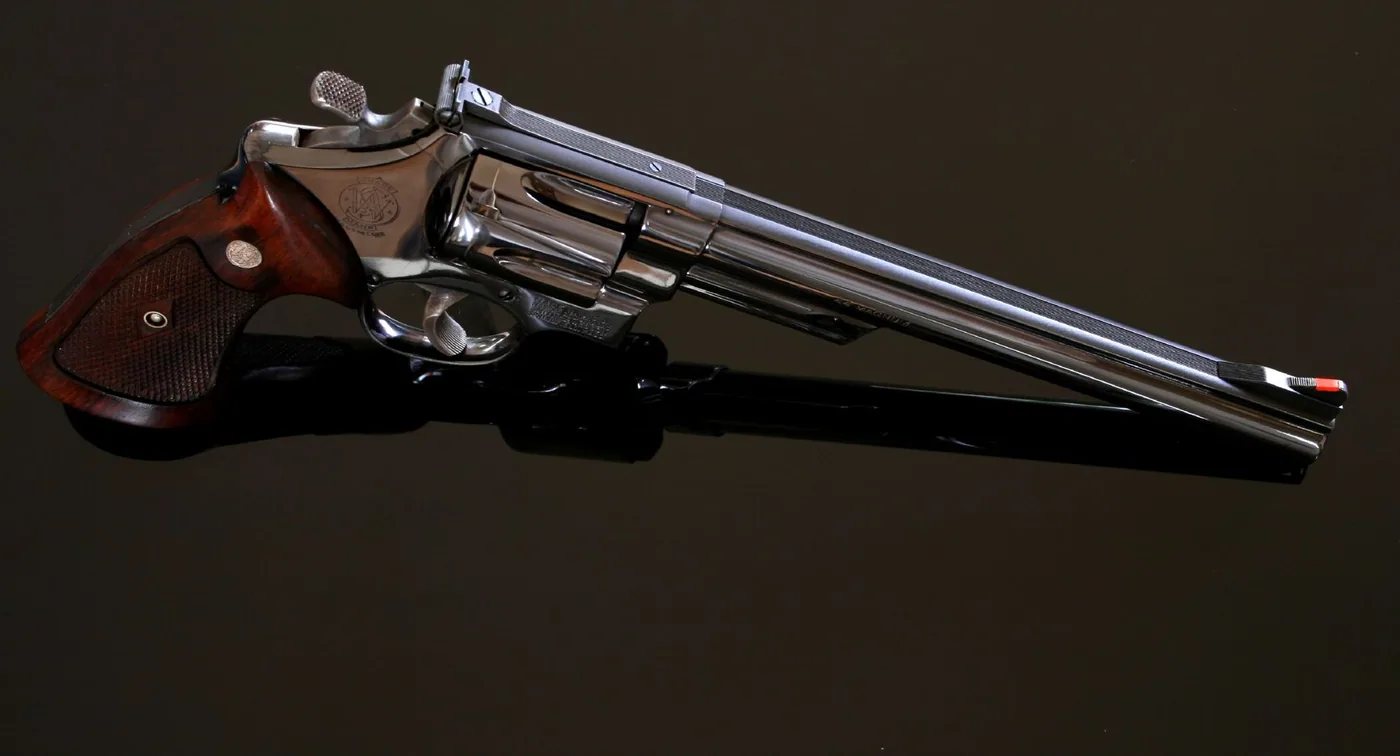
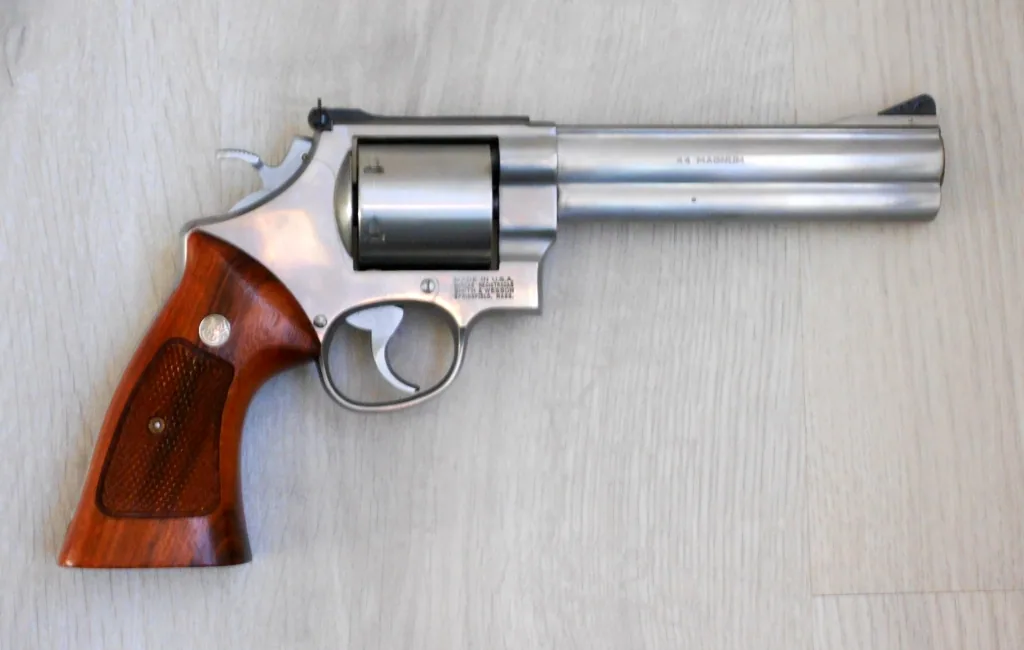
The .44 Magnum N-frame revolver made widely known through popular film, with early production and factory-original examples drawing particular interest.
Model 686
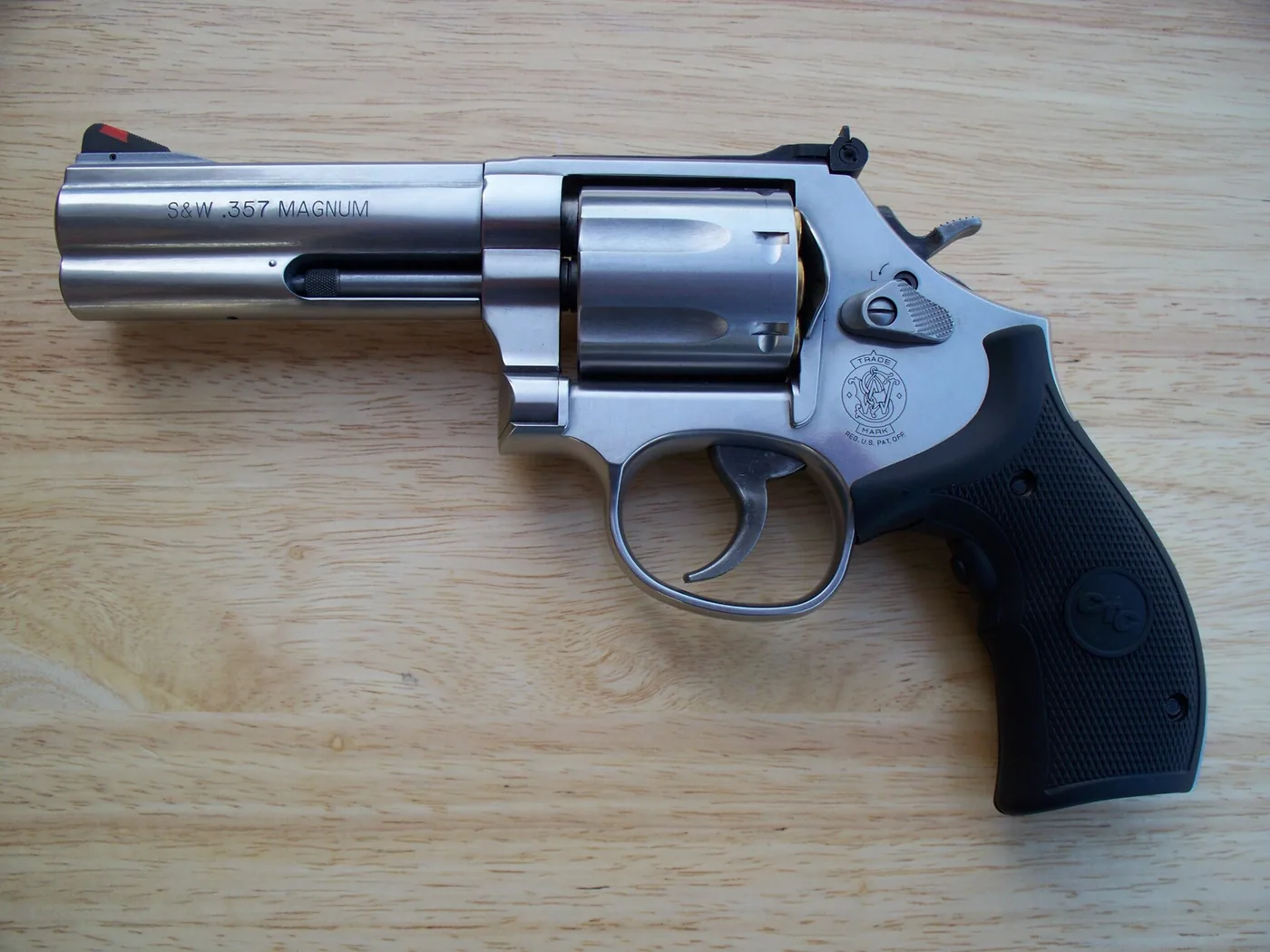
A stainless L-frame .357 Magnum revolver introduced to address timing issues found in some earlier K-frame magnums under sustained use.
M&P pistol line
Smith & Wesson's modern striker-fired polymer pistol series, relevant primarily to contemporary semi-automatic pistol collecting.