Smith & Wesson · Double-action revolver
Smith & Wesson Model 629 Value
The Smith & Wesson Model 629 is a stainless steel N-frame double-action revolver chambered in .44 Magnum, introduced in 1978 as the stainless counterpart to the blued Model 29. It was developed to appeal to hunters and outdoor users who wanted the corrosion resistance of stainless steel for a large-caliber revolver used in the field.
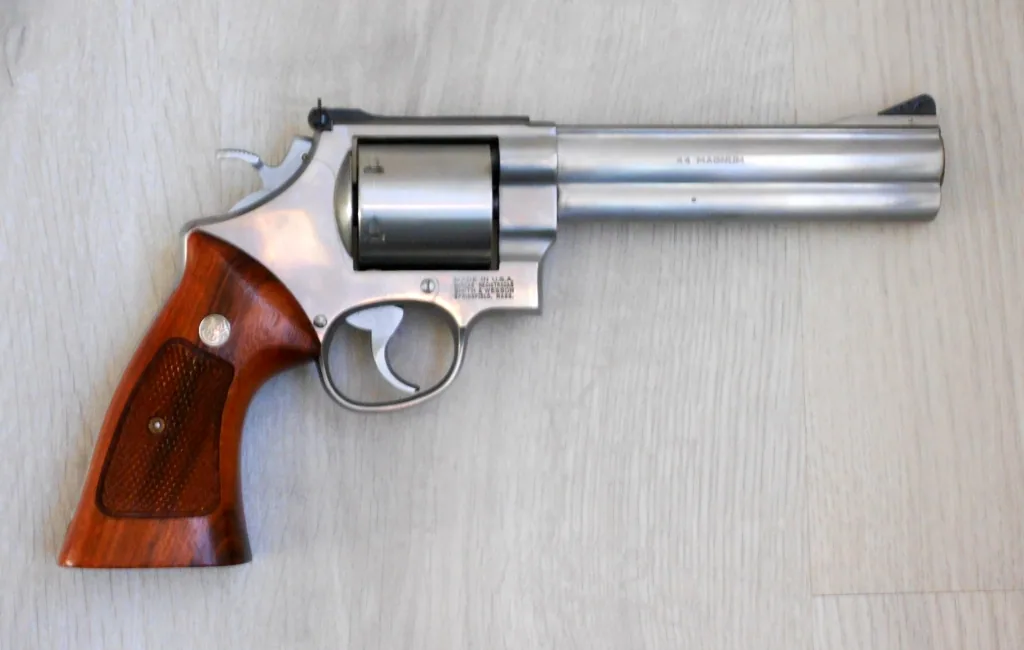
- Type
- Double-action revolver
- Production
- 1978 to the present
- Maker
- Smith & Wesson
About the Smith & Wesson Model 629
The Smith & Wesson Model 629 is a stainless steel N-frame double-action revolver chambered in .44 Magnum, introduced in 1978 as the stainless counterpart to the blued Model 29. It was developed to appeal to hunters and outdoor users who wanted the corrosion resistance of stainless steel for a large-caliber revolver used in the field.
The Model 629 has been offered in a variety of barrel lengths and configurations over its long production history, including Classic and Mountain Gun variants aimed at different shooting purposes, from hunting to lightweight field carry.
Because it has remained in continuous production for decades, later Model 629s incorporate updated internal features including the internal lock mechanism, while earlier stainless examples retain the original mechanical design.
Variations
Smith & Wesson Model 629 variations that matter
Configuration is often the difference between two otherwise identical examples.
Standard Model 629
Original stainless N-frame configuration in .44 Magnum with barrel lengths similar to the blued Model 29.
Model 629 Classic
Variant featuring a full underlug barrel and enhanced target-style sights.
Mountain Gun variant
Lightweight configuration with a tapered barrel intended for field carry rather than target shooting.
Barrel lengths
Offered in lengths including 4-inch, 6-inch, 6.5-inch, and 8.375-inch depending on the specific variant.
Valuation
What affects Smith & Wesson Model 629 value
We do not publish a price chart. These are the characteristics that determine what a specific example evaluates at.
Factor 1
Variant type
Standard, Classic, and Mountain Gun configurations are evaluated as distinct variants due to differing barrel profiles and features.
Factor 2
Barrel length
Longer barrel lengths such as the 8.375-inch are treated separately from shorter, more common lengths.
Factor 3
Pre-lock versus post-lock production
Guns produced before the early 2000s internal lock mechanism are distinguished from later production.
Factor 4
Condition of the stainless finish
Overall wear, holster marks, and any refinishing on the stainless surface are part of a condition assessment.
Factor 5
Originality of grips and sights
Factory grips and sight components are weighed against aftermarket replacements.
Factor 6
Mechanical timing
Cylinder timing and lockup on the large N-frame action are evaluated alongside cosmetic condition.
Smith & Wesson Model 629: common questions
Related to the Smith & Wesson Model 629
Manufacturers
Firearms we buy
Specialty value topics
Selling a Smith & Wesson Model 629?
Send the details and photographs and we will evaluate the example you actually own.