Smith & Wesson · Double-action revolver
Smith & Wesson Model 19 Value
The Smith & Wesson Model 19, known during development as the Combat Magnum, is a K-frame double-action revolver chambered in .357 Magnum, introduced in 1957 to offer a lighter-weight magnum revolver more suitable for daily law enforcement carry than the larger N-frame guns. It quickly became a widely issued duty revolver for police departments across the country.
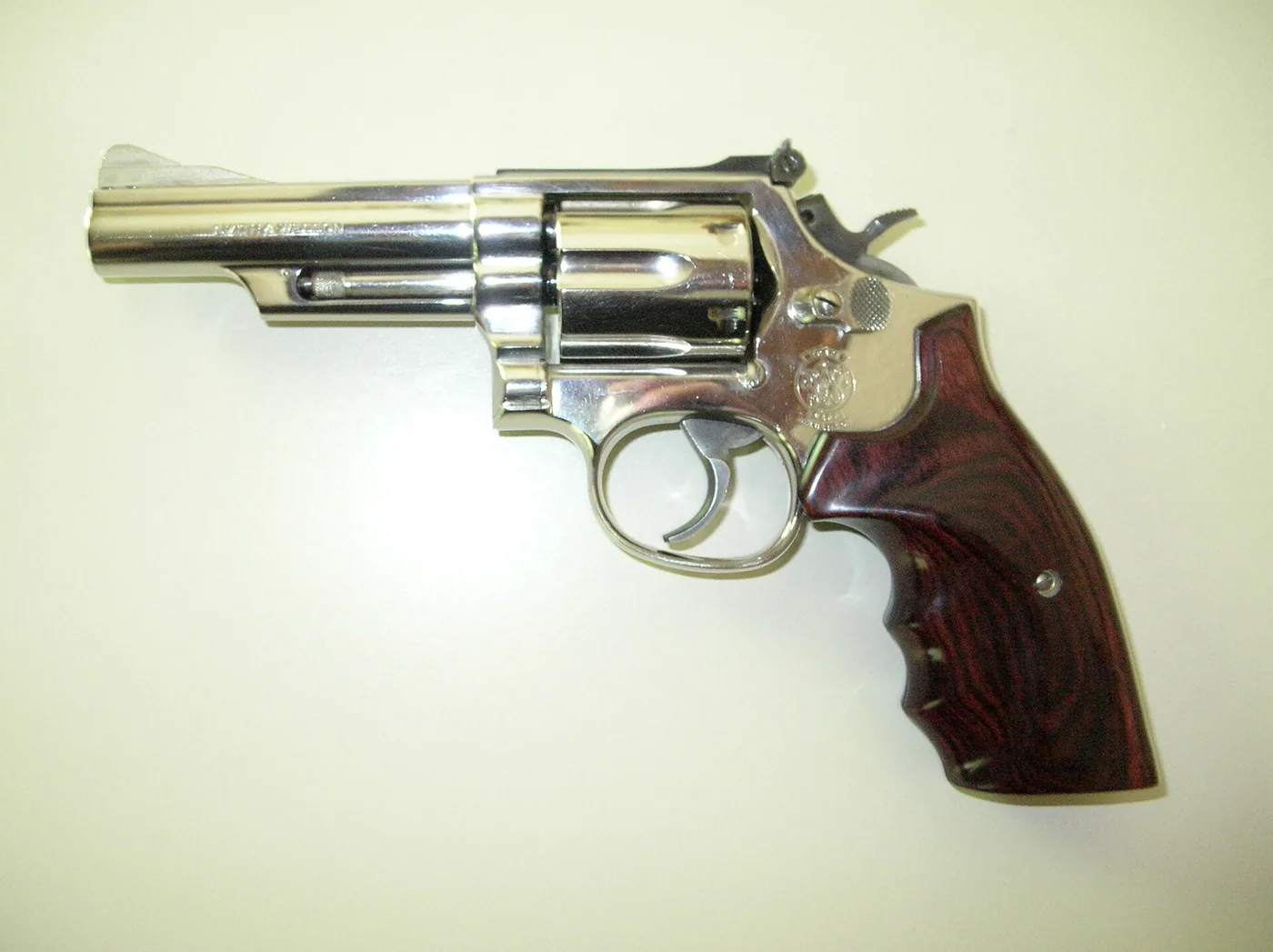
- Type
- Double-action revolver
- Production
- 1957 to the mid-1990s, with later limited reintroductions
- Maker
- Smith & Wesson
About the Smith & Wesson Model 19
The Smith & Wesson Model 19, known during development as the Combat Magnum, is a K-frame double-action revolver chambered in .357 Magnum, introduced in 1957 to offer a lighter-weight magnum revolver more suitable for daily law enforcement carry than the larger N-frame guns. It quickly became a widely issued duty revolver for police departments across the country.
The Model 19 combined a K-frame size similar to Smith & Wesson's popular .38 Special service revolvers with the added power of the .357 Magnum cartridge, appealing to officers who wanted magnum capability without the added bulk of an N-frame gun. It was offered in blued and nickel finishes with multiple barrel lengths.
Because the Model 19 saw extensive use as a duty weapon, many surviving examples show significant use, and Smith & Wesson later addressed forcing-cone durability concerns that arose from sustained use of full-power .357 Magnum loads in the K-frame.
Variations
Smith & Wesson Model 19 variations that matter
Configuration is often the difference between two otherwise identical examples.
Barrel lengths
Common barrel lengths include 2.5-inch, 4-inch, and 6-inch, with the 4-inch being especially common among duty-carried examples.
Finish options
Blued finish was most common, with a nickel-plated version, the Model 66, offered as a related stainless steel counterpart.
Combat Magnum early production
Early Model 19s carry Combat Magnum-era features before the model number system was fully established in catalogs.
Pre-lock versus post-lock production
As with other long-produced S&W revolvers, guns made before the early 2000s lack the later internal lock mechanism.
Valuation
What affects Smith & Wesson Model 19 value
We do not publish a price chart. These are the characteristics that determine what a specific example evaluates at.
Factor 1
Duty wear and condition
Because many Model 19s served as police duty revolvers, holster wear, finish loss, and overall condition vary widely and are central to evaluation.
Factor 2
Barrel length
The 2.5-inch barrel variant is less common than 4-inch and 6-inch guns and is treated as a distinct configuration.
Factor 3
Originality of grips and sights
Factory grips and original adjustable sight components are weighed against aftermarket replacements common on former duty guns.
Factor 4
Mechanical condition
Because the K-frame forcing cone can show wear from sustained magnum use, mechanical condition is an important part of any assessment.
Factor 5
Finish and production era markings
Roll marks and finish details help identify production era and are considered alongside overall cosmetic condition.
Factor 6
Documentation
Departmental markings or documented law enforcement provenance, where present, are considered as part of an evaluation.
Smith & Wesson Model 19: common questions
Related to the Smith & Wesson Model 19
Manufacturers
Firearms we buy
Specialty value topics
Selling a Smith & Wesson Model 19?
Send the details and photographs and we will evaluate the example you actually own.